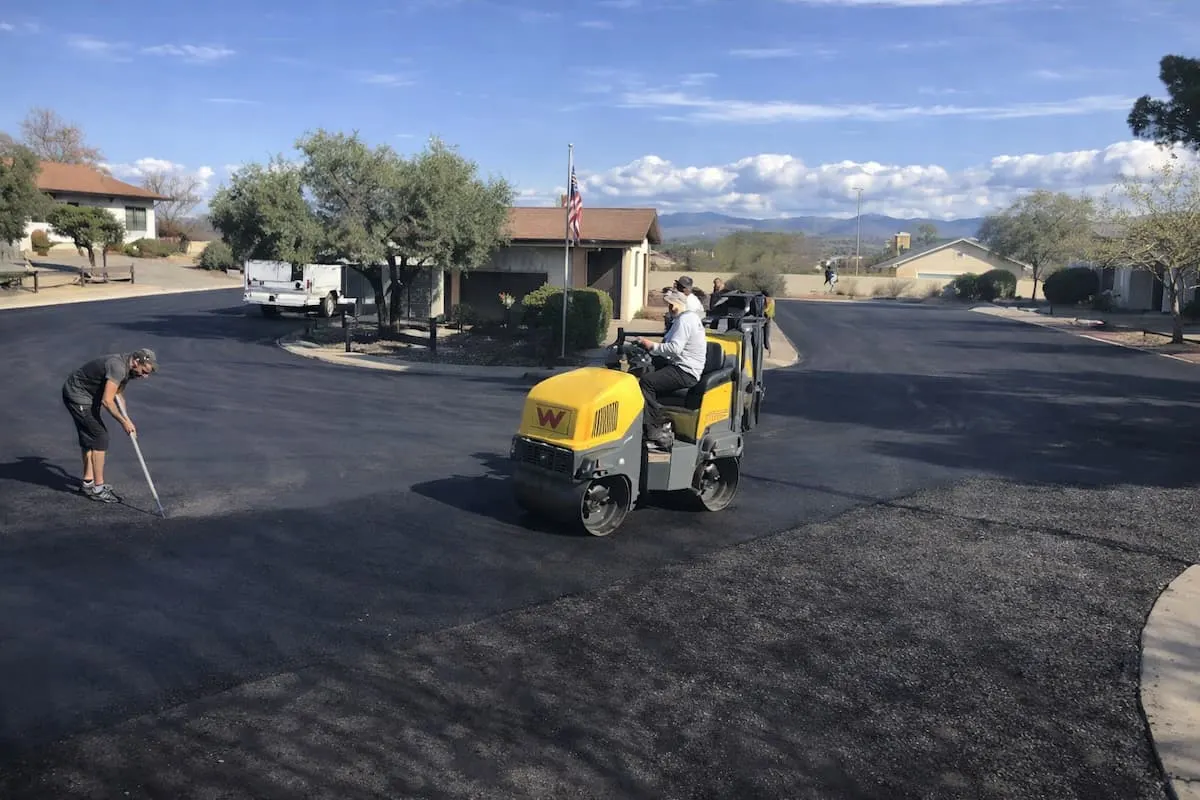
New Asphalt Driveway or Overlay in the Phoenix Area
An overlay makes sense in the Phoenix, AZ area when the existing driveway is still solid underneath and mostly worn on top. A new driveway may make sense when the base (the compacted layer of rock under the asphalt) has failed or water is getting where it should not. Age alone does not decide it. The condition of the pavement, base, drainage and edges does.
What an overlay changes compared with a new driveway
An overlay is a fresh layer of hot asphalt placed over pavement that can still carry it. It covers surface wear, fades, and small defects once the crew has repaired the cracks and low spots. It does not fix anything below the old surface.
Replacement means the old asphalt comes out. That lets the crew look at the base, correct soft or uneven areas, set proper slopes and lay a full new section. It often costs more and takes longer because there is usually more work, and the scope is what drives the price, not the size of the drive alone.
One difference people miss is height. An overlay raises the finished surface, so the places where the driveway meets other things matter:
- The garage threshold, where a taller surface can let water run toward the door.
- Walkways and slabs that sit beside the drive.
- The apron at the street, where the new edge needs to blend in without a lip.
Replacement can reset those heights. An overlay has to work within them.
Signs an overlay may be suitable
Overlay is usually on the table when the damage is on the surface and the driveway still feels firm underfoot. Look for these:
- The surface is rough, faded or raveling (loose stones working out), but the shape is still flat and even.
- Cracks are limited and narrow, and they are not tied to sunken or shifting areas.
- Water runs off toward the street or a drain, and it does not sit in one spot after rain.
- The added height will not cause problems at the garage, walkways or street.
Cracks need a closer look. Some can be cleaned and filled before paving. Others show movement, and if the cause is still there, the crack can return through the new layer. An up-close inspection may help a crew assess which kind you have. That kind of review can help assess whether asphalt resurfacing is suitable.
When replacement may be the better fit
Replacement may be the better fit when the problems go deeper than the surface. Warning signs include:
- Widespread alligator cracking, a web of small connected cracks that looks like reptile skin.
- Soft spots that flex or sink when you walk or drive over them.
- Patches that keep failing in the same places.
- Standing water, which can point to poor grading or a base that has settled.
The reason is simple. A new layer is only as stable as what it sits on. If the base is weak, the overlay follows the same movement, and the old cracks and dips tend to reflect up into the new surface. You could end up paying for a fresh layer that develops similar problems.
Replacement can also allow drainage corrections while the old pavement is out of the way. If water has been a recurring issue, that alone can tip the decision. For a full rebuild, see our driveway paving page.
Quick comparison
| Factor | Overlay fits when | Replacement fits when |
|---|---|---|
| Surface | Worn, faded or lightly cracked | Widespread alligator cracking or breakup |
| Base | Firm, no soft spots | Soft, sunken or repeatedly patched |
| Drainage | Water leaves the drive | Water stands or collects |
| Transitions | Extra height causes no conflict | Heights need to be reset |
Phoenix area conditions and a useful next step
Phoenix area summers usually run hot, and asphalt softens in that heat. A driveway with a weak base or thin surface can rut or show tire marks more easily. Monsoon storms often arrive from July to September, so that is a good window to watch how your driveway handles heavy rain. Note where water pools, where edges look undercut and where new cracks or low spots show up afterward.
Conditions also change from lot to lot. Homes in Phoenix, Mesa and Gilbert can have different grading, drive lengths, street connections and shade, so one fix does not fit every property. If your driveway slopes toward the garage, or the soil along the edges is loose or washes out, those details matter more than the age of the pavement.
Your best step is to have a contractor review the surface, base, drainage and transitions, then price an overlay scope next to replacement so you can compare them. If you want a broader look at how we handle new work, see our asphalt paving page. Licensed, bonded, and insured. A Free Estimate is available.
Common questions
Can you put new asphalt over an old driveway?
Yes, if the old pavement is stable and drains well. Cracks and low spots are repaired first, and the added height has to work at the garage, walkways and street.
When should you overlay an asphalt driveway instead of replacing it?
Overlay fits when the damage is mostly on the surface and the base feels firm. If you see soft spots, widespread alligator cracking or standing water, replacement is usually the better path.
Is asphalt driveway resurfacing a good idea in Phoenix?
It can be when the base is sound. Hot summers and monsoon rain from July to September are good reasons to check the surface and drainage first, so the new layer is not covering a problem.
Areas we serve
Our services
Have a question about your project? Call (480) 431-4233