
Asphalt Pothole Repair in Phoenix and Mesa
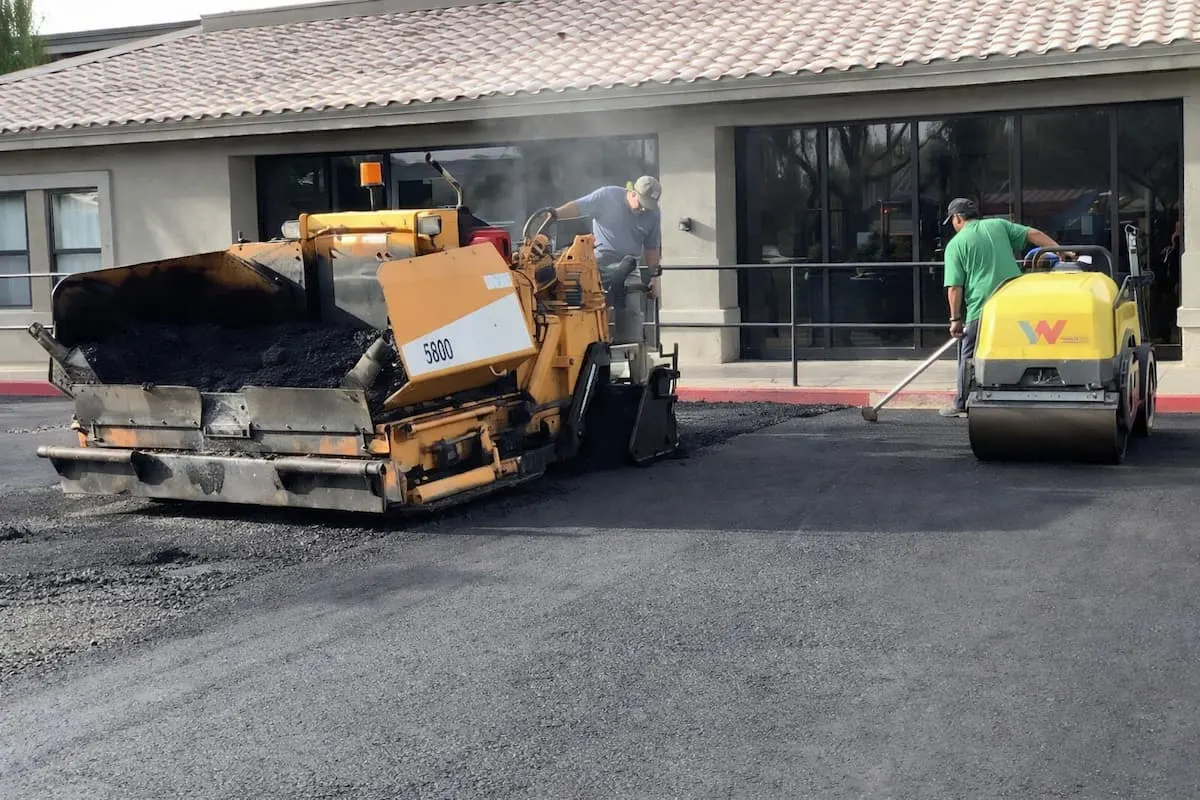
The right asphalt pothole repair depends on what surrounds the hole, not just the hole itself. A small, clean pothole in otherwise solid pavement can often take a localized patch. If the asphalt around it is cracked, crumbling or soft, the patch needs to reach further or the hole will come back. We handle asphalt repair for homeowners and property owners in Phoenix, Mesa and the surrounding Arizona communities, and the first job is always reading the damage correctly.
What the pothole and nearby pavement can tell you
Stand at the edge of the hole and look at its rim. Sharp, solid edges suggest the damage is contained. Loose, ragged or crumbling edges mean the asphalt around the hole is already breaking down, and that is where a repair will start to fail.
Look at the surface texture too. Exposed aggregate (the small stones in the mix) means the binder, the sticky oil that holds those stones together, has worn away. Pavement in that condition ravels, which means stones keep popping loose, and a pothole is often just the first place it showed up.
Then step back and look at the larger area. Is it one hole, or are there hairline cracks, alligator cracking (a pattern of connected cracks that looks like reptile skin) and low spots nearby? The table below sorts the two situations.
| What you see | Likely scope |
|---|---|
| One hole, firm edges, solid pavement around it | Localized pothole |
| Loose edges and exposed stone around the hole | Surrounding asphalt is failing |
| Connected cracking across a wide patch of pavement | Base or surface damage over a larger area |
| Same spot has broken down before | Water or base problem under the surface |
Also note whether water collects nearby after rain or irrigation. Ponding water is a common reason a spot keeps breaking down.
Why some pothole repairs break down
A pothole is a symptom. The base, the compacted stone layer under the asphalt, carries the load. When water gets under the surface, that base can soften or wash out, and the asphalt above it loses support. Traffic then breaks the pavement into a hole.
A patch placed over that same weak base is only as good as what holds it up. The same goes for the edges. If the repair is tied into cracked or crumbling asphalt, the seam between old and new becomes a path for water, and the patch loosens from the edges in.
Repair method depends on depth and condition. A shallow hole in sound pavement may need only cleaning out and filling with compacted hot mix. A deeper hole, or one with a soft base, may need the damaged section cut out, the base rebuilt and new asphalt compacted in layers. If the damage covers a wide area, patching hole by hole stops making sense, and asphalt paving over a larger section is the better answer.
Pothole repair conditions in Phoenix and Mesa
Phoenix area summers usually bring intense heat, and asphalt gets soft and flexible under it. Heat alone does not make a pothole, but it ages the binder over time and makes weak pavement easier to rut and ravel under traffic.
The bigger trigger is water. Monsoon storms usually arrive from July to September across the Phoenix area, and a hard downpour can send water into any crack or open edge. Water that gets under a weak spot is what often turns a crack into a hole.
Arizona winters are generally mild, so deep freezes are not the main concern here the way they are in colder states. That shifts your inspection toward water entry, weak edges and spots that keep breaking down. If your lot or drive has clay soil, a low spot or a slope that sheds water toward the pavement, those conditions can add to the problem, so check them rather than assume.
After a heavy rain, walk the pavement. Look for ponding, fresh surface breakdown and new cracks, especially near old patches. Spotting these in the weeks after a storm lets you deal with a small area before it grows.
What to check before arranging a repair
A few minutes of notes make an estimate faster and more accurate. Before you call, gather this:
- The pothole's location on the property and its approximate size and depth.
- Any cracks, loose edges or exposed stone around it.
- Whether water collects there after rain or irrigation.
- Whether the spot has been patched before and how long the patch held.
- Whether other potholes or cracked areas are nearby.
Then ask the contractor one direct question: does this call for a localized patch, or a wider repair? A straight answer should explain what is happening under and around the hole, not only the hole itself. If a patch is proposed, ask how the edges will be cut and how the base will be handled.
Do not wait on an open pothole. Traffic and water enlarge it, and a hole that could have been a small repair can turn into a larger section of failed pavement.
Next step
If you have a pothole in Phoenix, Mesa or nearby, send us your notes and we will look at the damage and tell you whether it is a patch or something bigger. We offer a Free Estimate.
Common questions
Can I fix a pothole myself with bagged cold patch?
Bagged cold patch can work as a short-term fill to keep a hole from getting worse. It usually does not bond or compact like hot mix, so expect to redo it if the base or surrounding pavement is weak.
Who does pothole repair in Phoenix and Mesa?
We repair asphalt for residential, commercial and industrial properties in Phoenix, Mesa and nearby Arizona towns. We start with a Free Estimate so you know whether the job is a patch or a wider repair.
Why does the same pothole keep coming back?
Usually the cause is under or beside the patch, such as a soft base, water entering through nearby cracks or crumbling edges. Fixing only the visible hole leaves that cause in place.
Areas we serve
Our services
Have a question about your project? Call (480) 431-4233